

ANUBHAVAM
A spatial experience inspired by Kerala’s cultural identity, materials, aesthetics and traditions.
Thematic Experience
Cultural Identity & Aesthetics
Ambient & Space
OVERVIEW
Designed an immersive exhibition experience celebrating Kerala's cultural identity through spatial design, interactive installations, and multi-sensory storytelling, integrating handcrafted elements and region-specific architectural and cultural references. This project aimed to showcase the beauty of Indian aesthetics. As a group, we chose a state we were a bit familiar with, whose culture and traditions made it easier to connect with and translate those elements into the outcome. Completed over five days, the process was a great learning experience for us, and we hope it offered an equally engaging experience for the audience.
INDUSTRY
Space & Experience
TEAM
Me + 4
DURATION
1 Week, 2023
MY ROLE
Experience Designer
Space Planner

THE CHALLENGE
Design an exhibition space that transports visitors into the lived experience of Kerala, not as a museum display of artifacts, but as something felt, participated in, and remembered. The constraints were [1] five days, [2] a fixed floor area, and [3] an audience of college students with varying familiarity with South Indian culture.
The core design question became,
How do you make a culture experiential rather than informational within a temporary, resource-limited space?

RESEARCH & DISCOVERY
We combined secondary research with discussions with native Keralite friends and faculty to go beyond superficial aesthetics and grasp the sensory about daily life in Kerala: what people observe, smell, taste, and engage with.
What would make them stay in the space vs. walk past it?
What prior associations did they have with Kerala?
What would feel authentic vs. performative?
KEY INSIGHTS
Most students associated Kerala with backwaters and Kathakali, two dominant, almost cliched images. The opportunity was to go deeper: to surface traditions like Tholpavakoothu (shadow puppetry) and the state-run lottery system that are lesser-known but deeply embedded in daily Keralite life.
Some of the Key Elements of the state

Vallam Kali
Traditional boat race event, especially during the Onam festival.
Thol pavai koothu
shadow leather puppetry art form native to Kerala, India.
Lottery
Established in 1967 under the lottery department of the Government of Kerala.
Cuisine
Known for its use of coconut and spices, offering a wide range of vegetarian and non-vegetarian dishes like appam, sadhya, and seafood specialties.
Kathakali
A classical Indian dance-drama known for its elaborate costumes, intricate makeup, and detailed gestures, originating from Kerala.
DESIGN STRATEGY
Phase
Entry
Observe
Engage
Participate
Take Away
Touchpoint
Fragrance + ambient sound
Paintings, Kathakali display, boat model
Live Tholpavakoothu performance
Lottery-bookmark purchase + raffle
Bookmark as physical memento
Engagement Level
Passive / sensory
Visual / educational
Attentive / immersive
Active / social
Lasting / personal
Rather than treating the space as a gallery of separate items, we designed a narrative arc,
a journey that moved visitors through escalating levels of engagement.
Entry → Observe → Engage → Participate → Take Away
This arc was intentional. Most exhibition spaces front-load the "wow" and leave visitors with nothing to do at the end. We inverted that the most participatory moment (the lottery draw) came last, giving people a reason to stay and a story to leave with.
SPATIAL DESIGN DECISIONS
In experience design, spatial sequencing is the narrative. The order in which someone encounters elements shapes their emotional arc. We treated the floor plan as a storyboard.
The layout logic is that the floor plan wasn't decorative; it was a routing decision. We mapped visitor flow like a user journey:

Entrance
Camera
Paintings
Vallam Kali
Fish hanging
Kathakali
installation
Coconut lamp
Tholpavai koothu
Audience
seating
Lottery ticket selling
Entrance
Camera
Paintings
Vallam Kali
Fish hanging
Kathakali
installation
Coconut lamp
Tholpavai koothu
Audience
seating
Lottery ticket selling

[ Team working on the Installation ]

TEAM TOGETHER
We spent a week just ideating, making, and having fun painting, building, trying new things, messing up, fixing it, and capturing it all along the way. A lot of learning, a bit of chaos, and a great experience overall.

[ Backstage Preperation ]
LET THE ANUBHAVAM BEGIN

[ SCROLL DOWN ]
01
THOL PAVAI KOOTHU
Kathakali is already well-known. Leading with it would confirm expectations rather than shift them. Tholpavakoothu, a leather puppet shadow play traditionally performed in temple settings was unfamiliar to most visitors, which made it a stronger vehicle for genuine discovery. It also had practical advantages: it required controlled lighting, which naturally created a theatrical atmosphere that elevated the entire space.
We crafted Paper puppets instead of leather and performed stories from the Ramayana with live narration and rhythmic accompaniment. The dimmed setting and focused light drew visitors into a shared, quiet attention, a contrast to the busy, social energy of the rest of the exhibition.


02
VALLAM KALI
A full-size boat would have been impractical and, more importantly, would have read as a set piece, impressive but hollow. A carefully crafted scale model, built from wood and foam, invited closer inspection. Visitors leaned in, asked questions, noticed details. The intimacy of the object created a different kind of engagement than spectacle would have.

Since bringing an actual boat wasn’t practical for us as students, we chose to recreate it as a scaled model, capturing its essence in a compact form. Built at a 1:30 scale using wood and foam, the model reflects the elegance and structure of the original.
03
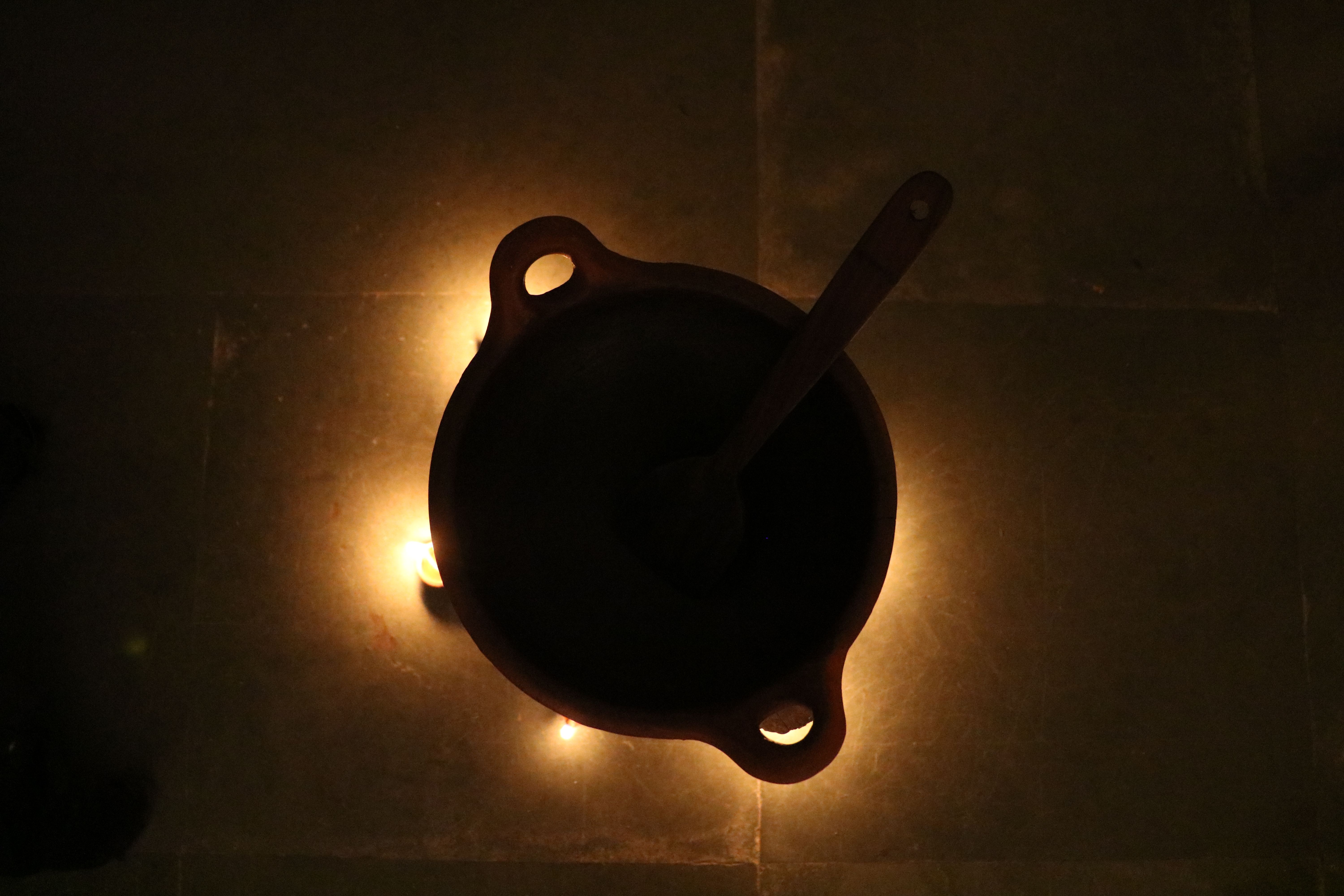
MEEN CURRY
Kerala fish curry, locally known as Meen Curry, is a staple of the coastal cuisine of Kerala, India. Renowned for its rich use of seafood, the dish is traditionally prepared in a clay (mud) pot, which enhances both its flavor and aroma. This traditional cookware adds to the overall aesthetic, bringing an authentic taste and essence to the dish.


*Positioned so that it falls within the conventional culinary dish.

04
COCONUT SHELL LAMP
Coconut shell lamps, also known as "Nariyal Diya" or "Thenga Thatti" in Kerala, are traditional lamps made from coconut shells.
Coconut shell lamps in Kerala embody the region's rich cultural heritage, craftsmanship, and reverence for tradition, serving as both religious artifacts and decorative pieces that connect people to their roots and cultural identity.


[ Yah.That's Me ]

05
KATHAKALI OUTLOOK
Kathakali is a distinguished classical dance form originating from Kerala, India, known for its intricate costumes, detailed makeup, elaborate gestures, and well-defined body movements presented in tune with the playback music and complementary percussion


One of the most striking features of Kathakali is its heavy and elaborate makeup and costumes, which are bright, colorful, and designed to give the characters a superhuman, larger-than-life appearance. The makeup is symbolic, with different colors representing qualities of the characters - for instance, green for heroes and nobility, red for evil, and black for forest dwellers and hunters.

06
LOTTERY TICKETS
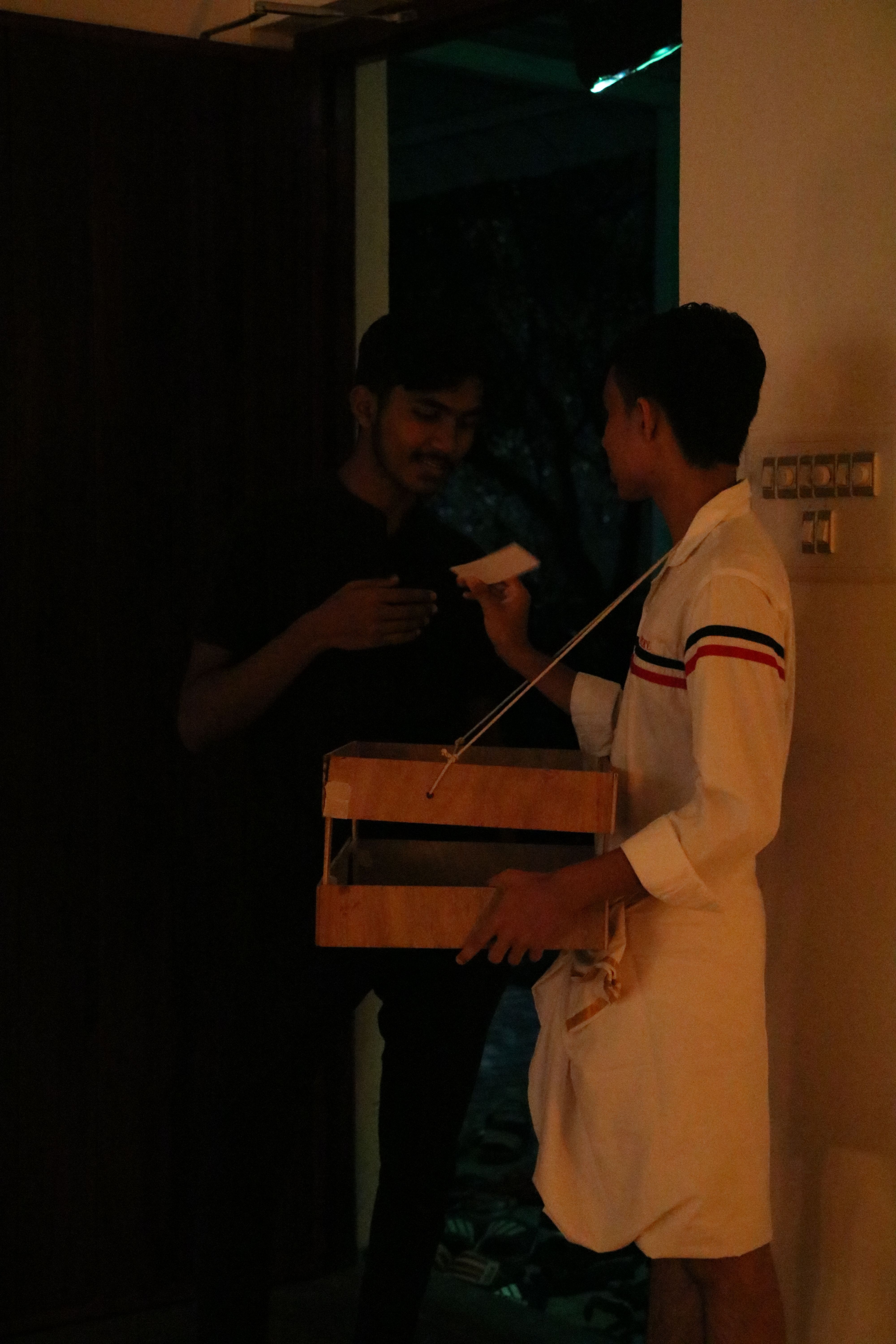
Lottery tickets in Kerala are widely available through authorized outlets across the state. This has become a distinctive aspect of its identity, as it is one of the few states in India where lottery sales are legal and regulated. Designed lottery tickets in the form of bookmarks.
Each bookmark carries a unique number printed beneath it. After every sale, a number is selected through a random draw, and the owner of the matching bookmark receives a cash prize. This fun challenge also engaged the audience, encouraging participation and helping us sell all the bookmarks.


[ And People Loved It ]


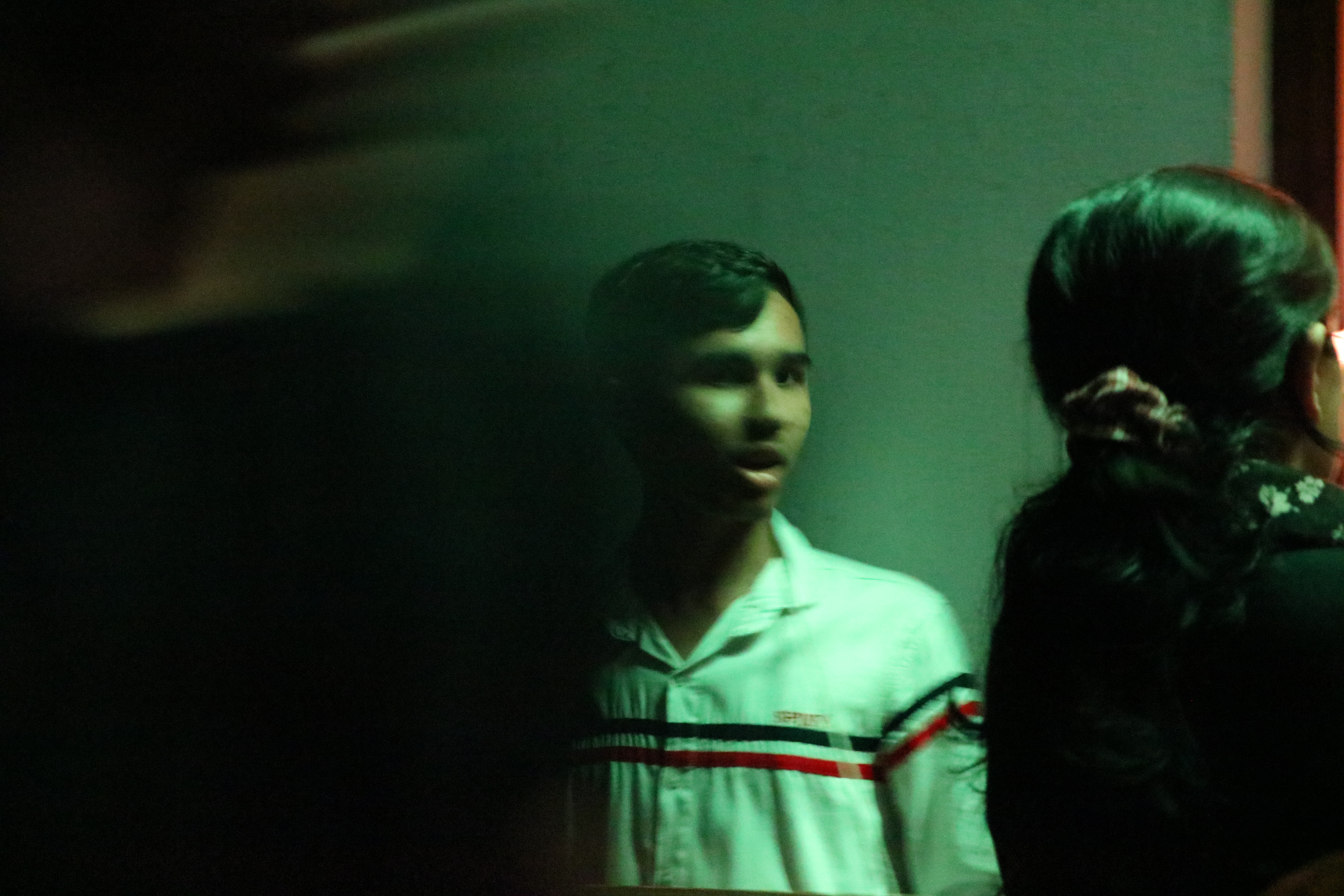
We appointed our young Malayalee junior as the official “lottery ticket” seller for the entire exhibit and he absolutely owned the role. With his charm and sales skills, he didn’t just sell bookmarks, he practically made them disappear. Safe to say, thanks to him, we were completely sold out!
07
KERALA ART STYLE & PAINTINGS
These paintings were created by the group, with the centerpiece done by me in a cartoonish style, my first-ever painting. It features a playful fusion of Theyyam and Kathakali characters. Theyyam is a ritual art form recognized for its vibrant costumes and divine figures. Kathakali is a classical dance-drama known for expressive makeup and storytelling.


GRATITUDE
In conclusion, our traditional puppet performance along with the interactive lottery ticket that also served as a bookmark created an enjoyable and memorable experience for the participants. The excitement of the prize draw and the pleasant fragrance in the venue added to the overall atmosphere. I sincerely thank my teammates Sushmitha Nair, Pannaga Bhat, Sai Harrish, Samyuktha Nair,Sujan Sivaraj and Anuraj for their support and contribution.